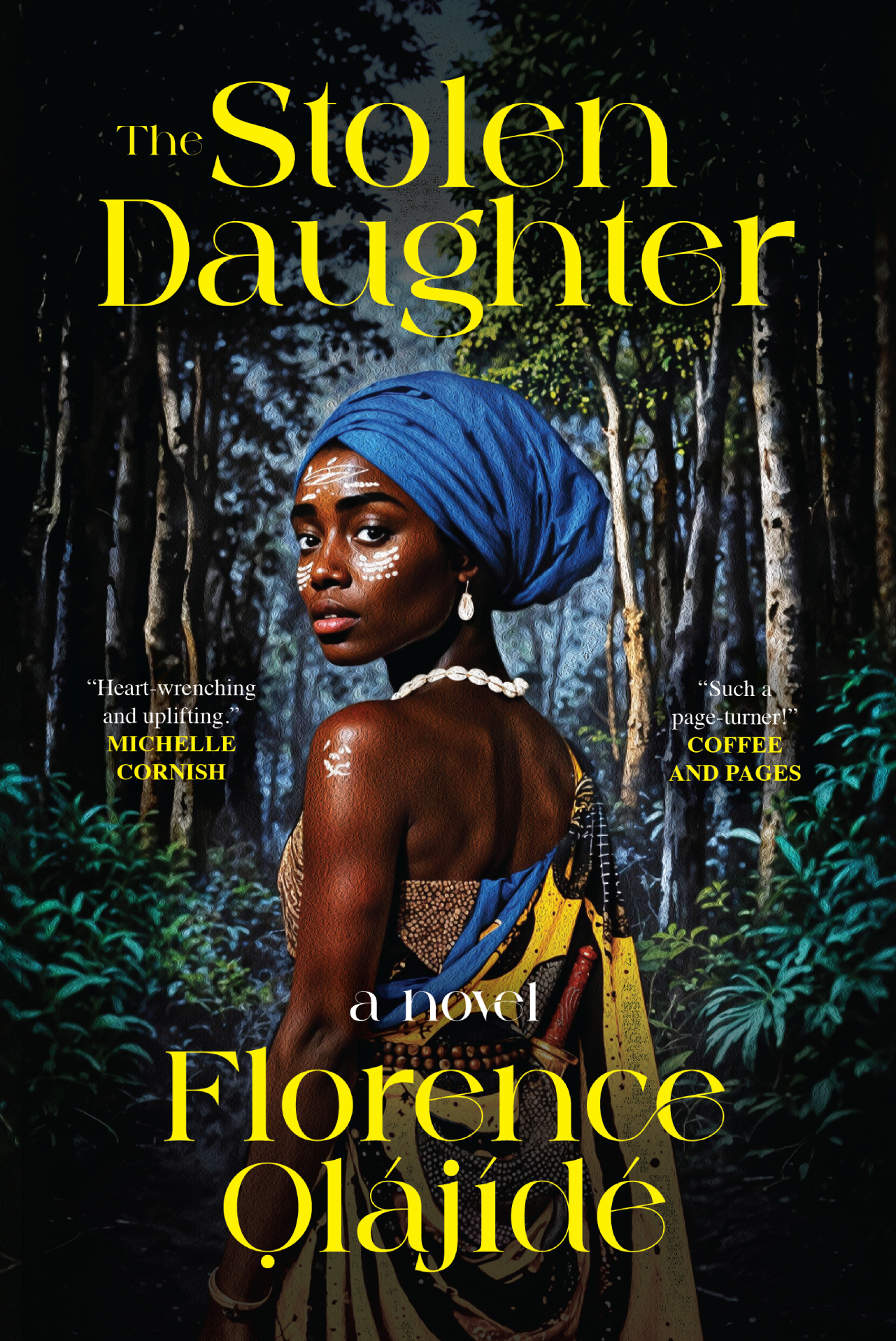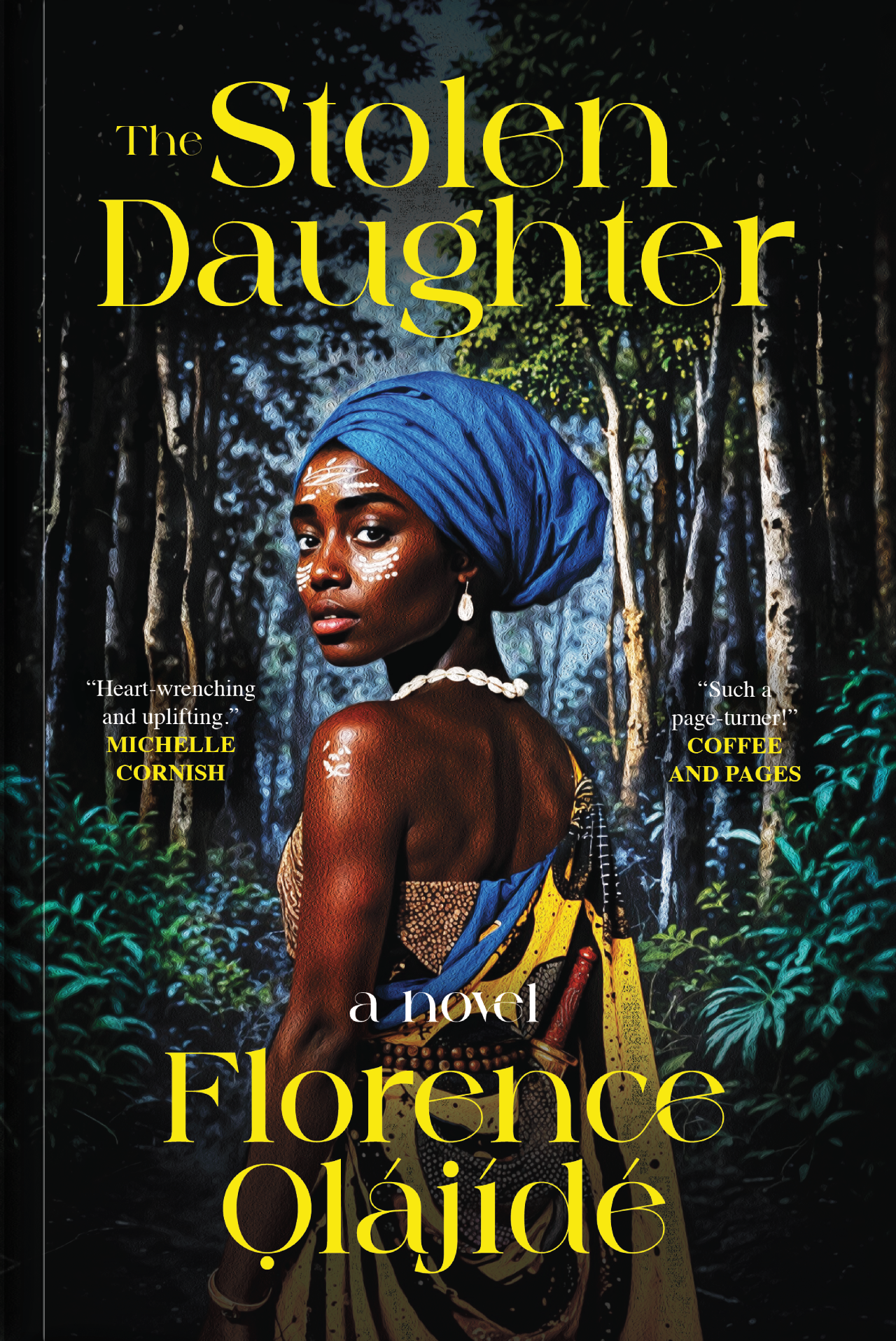
The Stolen Daughter

A Novel
(Based on 1 reviews)

14,000.00

Paperback
14,000.00
In Stock
Total

Inspired by true events, The Stolen Daughter is a gripping and unforgettable story about overcoming unimaginable hardship against all the odds, and the unending courage and strength of women in a world ruled by men.

In a small, peaceful village in Western Africa, fourteen-year-old ìkmi dreams of being like the boys, learning how to hunt and defend herself. But as her father reminds her often, in order to make her family proud she must live by the rules and marry well.

Soon, everything ìkmi loves shatters in an instant. Her beloved village is raided and ìkmi is taken from her family to work for Madam Tinúbú, a rich and powerful slave trader. As she begins her new life alone, ìkmi’s only comfort is the memory of her little brother’s laughter as they played together before she drifts off to restless sleep.

ìkmi longs to see her family again and she knows deep down that the only way to survive her brutal new life is to be her enemy’s greatest ally. When she uncovers a plot against Madam, ìkmi faces an impossible decision. Can she stay faithful to a ruthless slave trader who has taken everything she ever loved if it means she might see her family again? Or will her own life and that of her family be in even greater danger?
Florence Olajide

Born in London, Florence spent her early childhood in a white foster family before moving, aged six, with her birth family to Lagos, Nigeria, where she grew up.

She holds a BA honours degree in Education from the University of Lagos, Nigeria, and an MA in Further and Higher Education from the Institute of Education, University of London. She was the headteacher of a large London primary school before becoming one of Her Majesty’s Inspectors of Schools in England in 2003. 

Her memoir Coconut, an Amazon Best Seller, was published in 2021. Now semi-retired, when she’s not writing, Florence manages her education consultancy firm. She lives in Kent, England, and is married with three adult children and two grandchildren.

No praises yet. Check back later!

4.0
out of 5
5
(0)
4
(1)
3
(0)
2
(0)
1
(0)

1 review for The Stolen Daughter

  1. Adaora Nwoye

    The Stolen Daughter is a historical fiction novel set in 1848 West Africa, and it tells a brutal, necessary story about slavery from an African lens, before the ships, before the Middle Passage, before the version of history we’re usually handed.

    We follow Ṣìkẹ́mi, a fourteen-year-old girl whose life is violently disrupted when her village is attacked and she is captured and sold. From that moment on, the story becomes one of survival — physical, emotional, and psychological.

    What stood out to me most is that Ṣìkẹ́mi is not written as a helpless victim. She is angry. She is observant. She resists where she can, adapts where she must, and holds tightly to the hope of returning home. Her strength doesn’t come from being fearless; it comes from refusing to let captivity erase who she is.

    The author does not soften the realities of enslavement. The fear, the power imbalance, the violence, the loss of agency — it’s all there. It shows how systems are built, how people are broken by them, and how some still manage to endure.

    Another thing I appreciated is the historical depth. This book explores internal slave trade within Yorùbá land, the roles Efunsetan Tinubu, Ajayi Crowther, Akitoye, Kosoko played, the politics the British and Brazilians played in badagry and Lagos, and the uncomfortable truth that oppression wasn’t always foreign. That nuance adds weight to the story and makes it deeply unsettling in the best way.

    The pacing is steady, and the emotional impact builds quietly until you realize you’re fully invested in Ṣìkẹ́mi’s fate.

Add a review

Your email address will not be published. Required fields are marked *

Adaora Nwoye
January 10, 2026
The Stolen Daughter is a historical fiction novel set in 1848 West Africa, and it tells a brutal, necessary story about slavery from an African lens, before the ships, before the Middle Passage, before the version of history we’re usually handed. We follow Ṣìkẹ́mi, a fourteen-year-old girl whose life is violently disrupted when her village is attacked and she is captured and sold. From that moment on, the story becomes one of survival — physical, emotional, and psychological. What stood out to me most is that Ṣìkẹ́mi is not written as a helpless victim. She is angry. She is observant. She resists where she can, adapts where she must, and holds tightly to the hope of returning home. Her strength doesn’t come from being fearless; it comes from refusing to let captivity erase who she is. The author does not soften the realities of enslavement. The fear, the power imbalance, the violence, the loss of agency — it’s all there. It shows how systems are built, how people are broken by them, and how some still manage to endure. Another thing I appreciated is the historical depth. This book explores internal slave trade within Yorùbá land, the roles Efunsetan Tinubu, Ajayi Crowther, Akitoye, Kosoko played, the politics the British and Brazilians played in badagry and Lagos, and the uncomfortable truth that oppression wasn’t always foreign. That nuance adds weight to the story and makes it deeply unsettling in the best way. The pacing is steady, and the emotional impact builds quietly until you realize you’re fully invested in Ṣìkẹ́mi’s fate.
Book Trim140 x 216mm
Number of Pages366
ISBN (Paperback)978-978-61318-2-5
Release DateDecember 12, 2025
GenreHistorical Fiction

About Book

Author Bio

Praise

Reviews

Book Details